
The operator's liability in the case of an incident is limited to 3,000 crore for reactors with thermal power above 3,600 Megawatt; 1,500 crore for reactors with thermal power between 1,500 Mw and 3,600 Mw; 750 crore for reactors with thermal power between 750 Mw and 1,500 Mw; 300 crore for reactors with thermal power between 150 Mw and 750 Mw; and 100 crore for reactors having thermal power up to 150 Mw, fuel cycle facilities other than spent fuel reprocessing plants and transportation of nuclear materials.

FDI inflows into India are expected to register robust growth in 2026, supported by strong macroeconomic fundamentals, big-ticket investment announcements, sustained efforts to improve the ease of doing business, and a new generation of investment-linked trade pacts.

Victory wrested from regime that only listens when forced, the TMC said on GST exemption on insurance.

Full exemption for all health insurance premiums and reinsurance or a reduction in the GST rate from 18% to 5% on health insurance services is likely.

Ask rediffGURU and PF expert Milind Vadjikar your insurance, stocks, mutual fund and personal finance-related questions.

'In case a particular industry has not passed on the benefits and if we receive complaints, we will take up the matter with the industry body concerned.'

Recalling or relabelling medicines already in the supply chain before September 22 will not be mandatory, the finance ministry said on Tuesday, issuing a fresh set of frequently asked questions (FAQs) to address industry concerns following the announcement of goods and services tax (GST) revisions.

The rationalisation of goods and services tax (GST), announced on Wednesday, directly lowers the cost of everyday medical consumables, and also high-end therapies in oncology and rare diseases, helping reduce out-of-pocket patient expenditure and better adherence to medication.

Even by conservative assumptions that 5 to 10 per cent of infected individuals develop long Covid, India today may be home to 50 to 100 million infected individuals -- many silently coping with breathlessness, fatigue, palpitations, brain fog, or unexplained clotting tendencies.

'One has to be very mindful because it will be applicable for big tech platforms and even for banks and insurers, whose business is completely different.'

Given that a sizeable part of this money is part of the coveted current accounts and savings accounts, it is surprising that banks are not in a hurry to revive these accounts, notes Tamal Bandyopdhyay.

Among the Sensex firms, Mahindra & Mahindra jumped the most by 5.96 per cent. Bajaj Finance, Bajaj Finserv, Trent, ITC and HDFC Bank were also among the gainers. However, Maruti Suzuki India, Bharat Electronics, HCL Tech, NTPC, Power Grid, Infosys and Reliance Industries were among the laggards.

The GST Council on Wednesday approved a two-tier rate structure of 5 and 18 per cent, which will be implemented from September 22.

To ensure a glitch-free rollout of the next-generation GST with reduced rates and lesser slabs, Finance Minister Nirmala Sitharaman chaired three separate meetings to assess GSTN's preparedness and the time it would take to implement technological changes required in the software systems.

The life insurance industry reported a 25.28 per cent decline in new business premium income in November 2023 to Rs 26,494.83 crore from Rs 34,588.8 crore recorded a year ago. The fall in group premium and change in taxation norms for policies with a higher ticket size dragged the premiums of the state-run Life Insurance Corporation of India (LIC) and private insurers, respectively. According to the data released by the Life Insurance Council, the premium of private insurers slipped 9.33 per cent Y-o-Y to Rs 10,360.29 crore from Rs 11,426.73 crore as a result of a change in product mix due to the measures taken to counter the impact of tax imposed on the premiums of Rs 5 lakh.

'Ek baar aap GST dekh lo!' - Prime Minister Narendra Modi's gentle nudge to Finance Minister Nirmala Sitharaman in December last year sparked the beginning of a mammoth exercise to overhaul the tangled goods and services tax regime. And the final outcome is a significantly simplified system with lower tax rates and easier compliance for businesses.
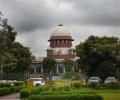
The Supreme Court of India has reprimanded the central government for failing to implement a cashless treatment scheme for road accident victims. The court expressed its concern over the delay in formulating the scheme, which is designed to provide immediate medical care to accident victims within the crucial "golden hour." The court highlighted that despite a statutory provision requiring the scheme's implementation, the government has not taken any action, prompting the court to intervene. The court also criticized the General Insurance Council (GIC) for raising objections to the scheme and delaying its implementation. The court has now directed the government to notify the scheme within a week and has scheduled a hearing on the matter for May 13.

'It must become faceless, just as the entire direct tax assessment system has already become fully online, without any human intervention in the normal course,' recommends A K Bhattacharya.

'In diabetes remission, you go below a 6.5 HbA1c without medication.' 'And this happens only when you lose 10 to 15 per cent of your body weight with a good amount of lifestyle and dietary changes, exercise and sometimes medication.' 'You have to be able to sustain your HBA1C below 6.5 for at least a year without medication to say that the patient is in remission.'

According to the data compiled by General Insurance Council, which is not publicly available, the insurers have settled 508,334 claims amounting to over Rs 4,800 crore.

Following suggestion from Minister for Roads Nitin Gadkari, Centre seeks ideas from IRDAI and General Insurance Council on feasibility of providing insurance cover for retrenchment.

The GST Council on Wednesday approved two slabs of 5 per cent and 18 per cent effective from September 22, the first day of Navaratri.

GST Reform 2.0, which trims tax slabs from four to two, signals a push for demand-led growth, and together with recent income tax cuts, sets the stage for sustained economic growth, experts said. The Goods and Services Tax (GST) Council on September 3 approved an overhaul of the indirect tax regime by taxing essentials at 5 per cent and other goods at 18 per cent. A new 40 per cent tax will be applicable on luxury and sin items.

Prime Minister Modi urged the people of the country to take pride in selling and buying indigenous goods.

Simplifying GST rates, removing exemptions, easing disputes, and speeding up refunds can boost investment in India and offer the best reply to Trump's tariffs, observes V S Krishnan, former member, Central Board of Indirect Taxes and Customs.

The next generation GST reforms would 'absolutely' set an economy open and transparent with further reduction in compliance burden and benefiting small businesses, Union Finance Minister Nirmala Sitharaman said on Tuesday.
The Life Insurance Corporation of India has the wherewithal to acquire a composite license, a top source aware of the development told Business Standard, adding that the insurance behemoth may look into entering the health and general insurance segments. "LIC has the scale, capacity, IT infrastructure, and the distribution reach to take advantage of the composite license. "LIC is looking at organic as well as inorganic growth opportunities.

The four public sector general insurance companies -- New India Assurance, United India Insurance, Oriental Insurance, and National Insurance Company -- have lost 800 basis points (bps) in market share in last five years to their private counterparts, the data from the Insurance Regulatory and Development Authority (Irdai) revealed. In 2018-19, the four had a cumulative market share of 40.04 per cent, with New India Assurance having a market share of 14 per cent and United India Insurance with a market share of 9.63 per cent. But, gradually in the past five years, these state-backed firms have lost their market share to private sector players, due to the declining health of their business.
Contrary to expectations, the new business premium (NBP) of life insurance companies dropped 12.62 per cent year-on-year (YoY) in March 2023 due to an over 30 per cent drop in Life Insurance Corporation (LIC) of India's premiums, albeit on a high base. Data released by the Life Insurance Council shows the industry racked up NBP of Rs 52,081 crore in March 2023, compared with Rs 59,608.83 crore in the year-ago period. NBP is the premium acquired from new policies in a year. It is the sum of the first-year premium and single premium, reflecting the total premium received from new businesses.

Health premiums have picked up again after a slight moderation in growth, taking the non-life insurance industry's growth to 22 per cent in November, and to almost 17 per cent so far this financial year. Health premiums grew by 22.54 per cent in the April-November period, driven largely by group health plans, which have seen good growth due to rationalisation of discounts in premiums caused by adverse claim ratios in prior periods, medical inflation, and enhanced coverage. Health premiums grew by 29 per cent in the same period last year.

Insurance companies reported nearly 23 per cent growth in first year premium in the first quarter of financial year 2024-25, when compared to the same period last year, with market leader LIC leading the charge with 28 per cent growth. According to the data released by the Life Insurance Council, the new business premium (NBP) increased by 22.91 per cent year-on-year (Y-o-Y) to ~89,726.7 crore in Q1FY25 from ~73,004.87 crore in Q1 FY24, reflecting a robust demand for insurance policies in the country.

In its master circular on general insurance products, which takes immediate effect, Irdai specified, 'The customer may be required to submit only those documents directly related to claim settlement.'

'Self-declaration from the customer in case of no change in KYC information or change only in the address details may be obtained.'

The Insurance Regulatory and Development Authority of India (IRDAI) is considering a proposal to make insurance frauds a parameter for calculating credit scores in an attempt to put a lid on the increase in such activity. The proposal, which is a part of the recommendations made by a working group formed by Irdai and the General Insurance Council, suggests that insurance frauds should feature when the risk profiles of individuals are evaluated and should be used to calculate their credit scores. A poor credit score can deprive a person of financial services such as loans and credit cards, and deter him from indulging in fraud.

The code of market conduct is being prepared under the aegis of the General Insurance Council (a self-regulatory body of the 12 non-life insurance companies) in this regard.

The insurance regulator IRDA on Monday said it is mulling to follow the lead insurance model based on geography, which is presently followed by the banking industry known as 'lead banking model'.
Insurance industry emerged as the largest investor in the stock market during 2007-08 surpassing the foreign institutional investors, riding on the huge popularity of Unit Linked Insurance Products, according to Life Insurance Council.

The Life Insurance Council has made a representation to the Insurance Regulatory Development Authority (Irda), seeking some revisions pertaining to unit-linked products.
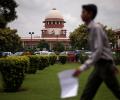
The Supreme Court has initiated a suo motu case regarding investigation agencies summoning lawyers and will examine if they can be put to notice. The action follows the Enforcement Directorate summoning senior lawyers, which was condemned by bar associations.
In a move that will bring cheer to health insurance policyholders, non-life insurers are finalising the contours of a new product that will have a common minimum standard cover and will be renewable and portable across companies.
